Test
Normally up to two innings per side across a scheduled multi-day contest.
Test cricket, one-day cricket and T20 share a contest between bat and ball, but they organise time and resources differently. That difference changes the questions a reader asks of a score. A quiet passage can belong to a longer plan, a limited allocation can make each legal ball more visibly scarce, and a final result can depend on a structure that the current team total does not show by itself.
Read provider context ↓Normally up to two innings per side across a scheduled multi-day contest.
Standard ODI: one innings each, nominally fifty overs before adjustments.
One innings each, nominally twenty overs before adjustments.

The Long View is an independent essay journal about those structures. It does not rank the formats or provide live match coverage. The comparisons use standard broad descriptions while leaving the current competition's playing conditions in charge of the actual match. Start with three useful references: time, legal balls and wickets. Then ask how the format combines them before deciding what a passage means.
A multi-day match gives play a different horizon from an innings with a fixed short allocation. That does not mean time disappears as a constraint. Sessions, intervals, interruptions and the scheduled duration still shape the contest. Saying that a Test innings has no predetermined fifty-over limit is different from saying that the match has unlimited time.
A reader benefits from locating the current passage inside that horizon. Which day or innings is being played? What result is still possible under the match structure? A score that looks modest in isolation can have a different role when connected to the remaining time and the other innings. The format supplies the frame for that interpretation.
Avoid translating duration directly into quality. A longer contest is not automatically more thoughtful, and a shorter one is not automatically simpler. They create different constraints. The useful comparison describes those constraints clearly rather than attaching a universal judgement to the number of hours a spectator spends watching.
Standard Test cricket allows two innings per side, subject to the playing conditions and ways an innings may conclude or be forfeited. Standard ODI and T20 cricket give each side one innings. That difference matters whenever a reader compares totals. A first-innings lead is not the same quantity as a final target in a one-innings-per-side contest.
Identify which innings a displayed total belongs to before subtracting figures. A screen can show several completed totals beside one current score. Their visual proximity does not mean they are interchangeable. The match record should explain how the innings connect and what the side batting is trying to achieve at that stage.
A declaration adds another reason not to read every completed innings as though all wickets were taken. The captain can end an innings under the relevant rules, changing the use of time and the sequence of the contest. The score alone needs its completion status to tell the reader what actually happened.
| Broad standard format | Innings per side | Nominal limited allocation |
|---|---|---|
| Test | Up to two | No preset ODI/T20-style innings quota |
| ODI | One | 50 overs |
| T20 | One | 20 overs |
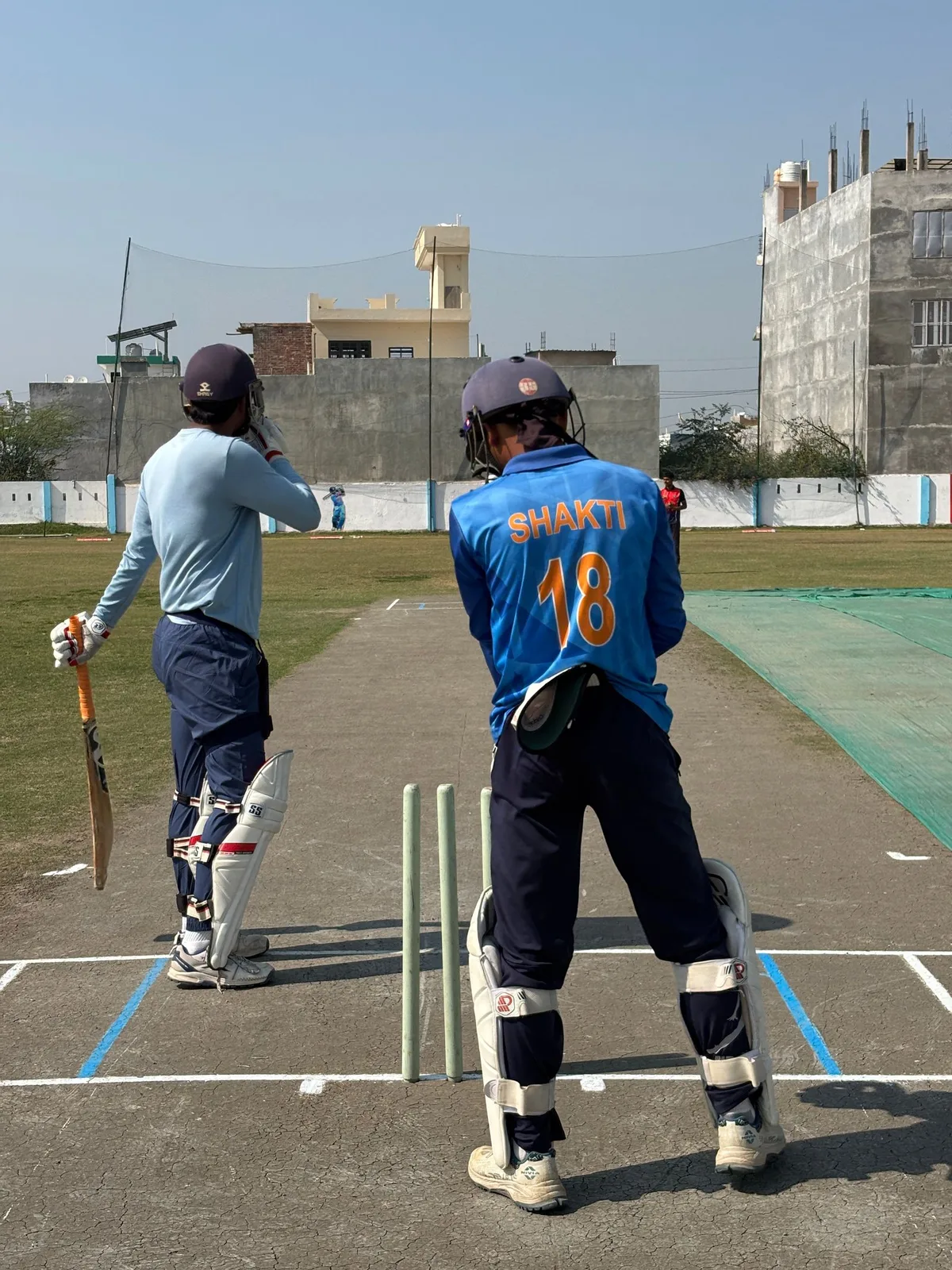
A standard ODI innings is allocated fifty overs and a standard T20 innings twenty, before reductions or other adjustments under the applicable conditions. The allocation gives the reader a concrete remaining resource to follow. Runs, wickets and legal balls can then be read together rather than treating the current total as a complete account of progress.
Overs notation still needs interpretation. Ten point three in a cricket display normally means ten completed six-ball overs and three further legal balls, not a decimal duration of ten point three overs. Convert to legal balls when calculating rates. The shorter format does not change that notation into ordinary decimal arithmetic.
An allocation is not a promise that every innings will use it. A chase can finish early, a side can be all out or an interruption can alter the permitted play. Read the innings status alongside the nominal format. The label T20 describes a structure, not proof that exactly twenty overs occurred in every innings.
A wickets figure records part of the state. Its significance depends on the innings, remaining batters, time and match demands. Two sides at the same runs and wickets can face different situations because one has many more legal balls available or because the wider match structure changes the objective.
Do not turn that context into an automatic numerical value for every wicket. A simple comparison can explain why wickets and balls both matter without pretending to measure a player's remaining potential precisely. The record supplies quantities; interpretation needs a question and assumptions that fit the actual situation.
The dismissal method can matter to individual analysis too. A team wicket does not always become a wicket credited to the bowler. Keep the team state and individual attribution distinct. That accounting principle survives across formats even when the tactical discussion around the dismissal changes.
A partnership connects two batters' contributions within an innings. Its total can include extras, so it is not always reconstructed by adding two individual scores over a loosely remembered interval. Use the defined start and end of the partnership and the team record when making a precise comparison.
The passage can also contain different kinds of play. Several quiet deliveries and a boundary may produce the same total as regular singles and twos. The final number compresses that sequence. If you want to discuss rhythm, return to the delivery record instead of attaching an adjective to the aggregate alone.
Format changes the horizon of the discussion, but it does not eliminate the need for evidence. A partnership in a short innings can still involve judgement and adaptation. A partnership in a long match can still include urgent scoring. Describe the actual passage before allowing the format's reputation to write the story for you.
A run rate measures runs per unit of overs, with legal balls interpreted correctly. It does not automatically measure how well a side has used every available resource. A current rate and a required chase rate answer different questions: one summarises scoring so far, while the other relates the remaining requirement to remaining deliveries under stated conditions.
For a simple fictional example, forty-eight runs from forty-eight legal balls is one run per ball, or six per six-ball over. The arithmetic is the same whether the passage appears in a longer or shorter format. Its significance changes with the innings state and objective. The rate calculation itself does not provide that wider judgement.
Keep a comparison's scope visible. A whole-innings rate can hide variation between phases, while a six-ball burst can exaggerate a short event's importance. Neither is inherently wrong. They become misleading when the reader is not told which window is being measured or when one window is silently substituted for another.
48 runs / 48 legal balls = 6 runs per six-ball over.
The arithmetic stays; its match significance can change.

Limited-overs formats commonly use fielding restrictions that affect different parts of an innings. The exact conditions can vary by competition, format and changes to the allocation. Do not reconstruct a current powerplay solely from a generic diagram or an old memory of a previous event.
Read the applicable rule and the actual innings state. An interruption can complicate how an allocation is divided, and the label on a broadcast should be checked against the competition context. A useful introductory guide can explain the purpose of the restriction without claiming one universal set of numbers for every limited-overs match.
The same principle applies to bowling limits and other format-specific provisions. A familiar broad structure is valuable, but the current conditions decide the details. Keeping those levels separate allows a reader to learn the game without mistaking a simplified comparison for an exhaustive rulebook.
A team total in a Test innings, a one-day chase and a T20 passage can use the same visual notation while describing different structures. Before comparing figures on another page, restore the competition, format and innings labels. A first-innings lead is not a chase requirement, and a nominal allocation is not proof that every permitted delivery was used.
For a separate commercial destination, Cricketin is a sponsored provider reference, not an official source defining the match format or confirming its result.
Visit CricketinThe distinction is especially useful when a compact panel sits beside a commercial quote. A recorded score answers a match-state question; the quote has its own subject and conditions. Neither should silently replace the other. Keep the format and moment with the sporting record so that a calculation about rates or resources continues to describe the actual innings rather than a familiar-looking number detached from its context.
A tie, a draw and a no-result are not interchangeable ways of saying that neither side won. They describe different outcomes under the laws and playing conditions. Equal-looking numbers on a graphic do not identify the result without the innings status and applicable rules. Read the recorded label rather than substituting the word that feels familiar.
Some competitions also specify tie-resolution procedures. An introductory comparison cannot establish that every event uses the same method. For a completed match, the official result and the conditions explain what happened. For a hypothetical scenario, preserve the assumptions instead of announcing a resolution that the available information has not yet determined.
A viewer may follow a match continuously, return for a session or encounter only highlights. Each approach selects information. A highlight package can make every passage look eventful because uneventful deliveries have been removed. A long uninterrupted view preserves sequence but asks the viewer to retain more context.
Use a clearly identified scorecard to restore quantities that the visual selection omits. Check the innings and moment before connecting a clip to a current score. A replay from an earlier passage can remain relevant while no longer describing the present state. That time difference matters across every format.
Do not assume that watching fewer minutes means understanding less, or that watching everything guarantees a sound interpretation. The useful habit is to connect the chosen view to a trustworthy record. A short, well-labelled sequence can support a precise observation; an unlabelled montage can invite a much broader claim than it deserves.

The three broad formats offer different frames for following the same sport. A longer contest can preserve changes across days and innings. A one-day allocation gives a defined innings resource within a day. T20 makes a shorter allocation especially prominent. Those descriptions help locate the reader's question without declaring that one format owns a particular virtue.
When comparing them, state what is being compared: standard innings structure, nominal allocation, a fictional rate or a viewing experience. Do not let the category drift halfway through the argument. A clear comparison can acknowledge shared principles while showing where the constraints genuinely differ.
Return to time, balls and wickets whenever the format label starts doing too much explanatory work. Identify the actual state, read the relevant conditions and describe the passage that occurred. The game becomes richer when its structures clarify the question rather than replace the evidence needed to answer it.